New lawn care
New lawn care: seeding, watering, and the first mow
A new lawn changes quickly. Use these guides to move from seed to established turf by watching the plant and conditions instead of relying on a single calendar date.
Evidence-backed field notes
Guides for this decision
Evidence-backed guide
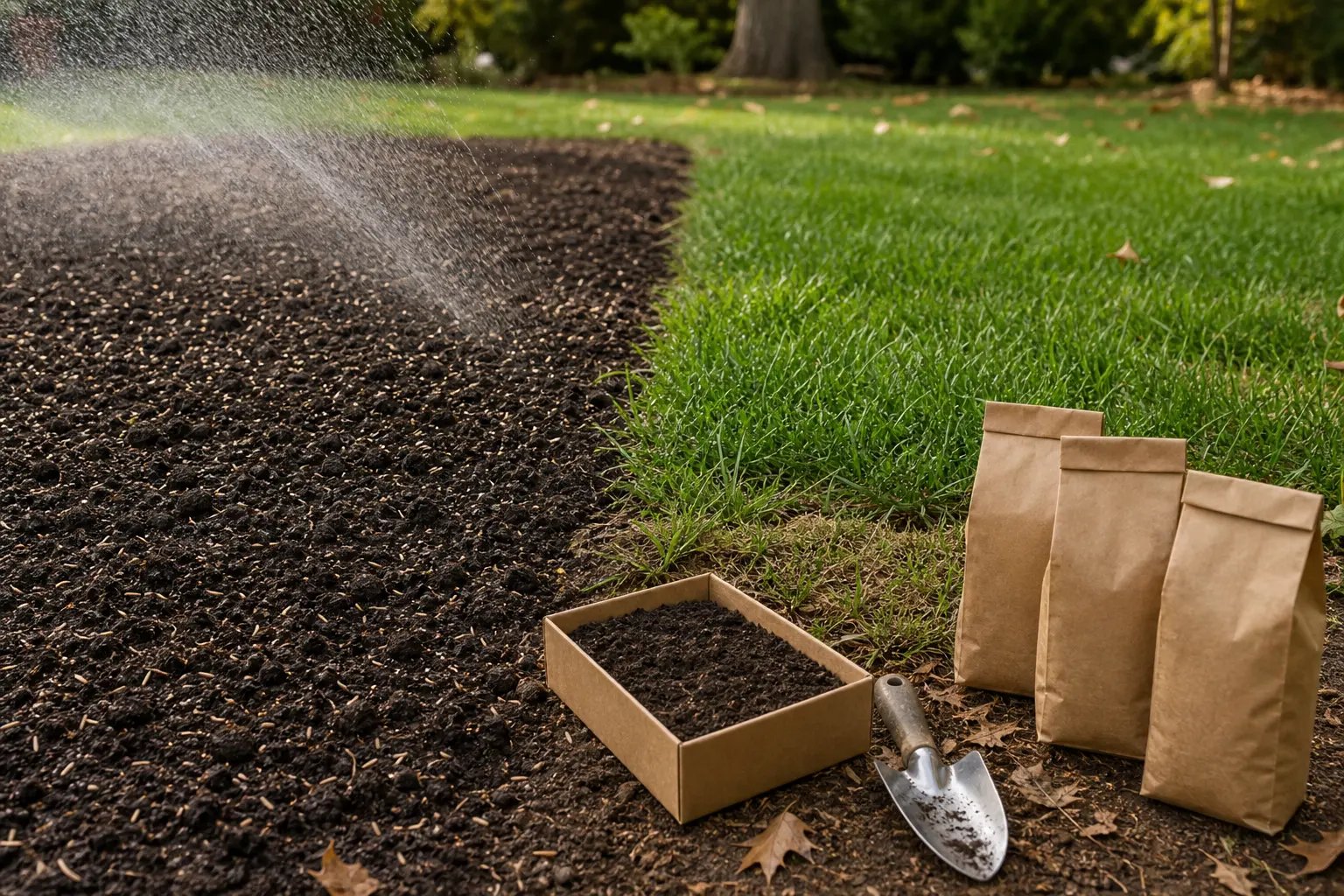
Seeding This Week? Don’t Let a Starter Bag Decide on Lime or Phosphorus
If the local cool-season seeding window is open, get the seed down. Let a representative soil test—not an automatic starter-fertilizer or lime purchase—decide the amendments.
· 5 sources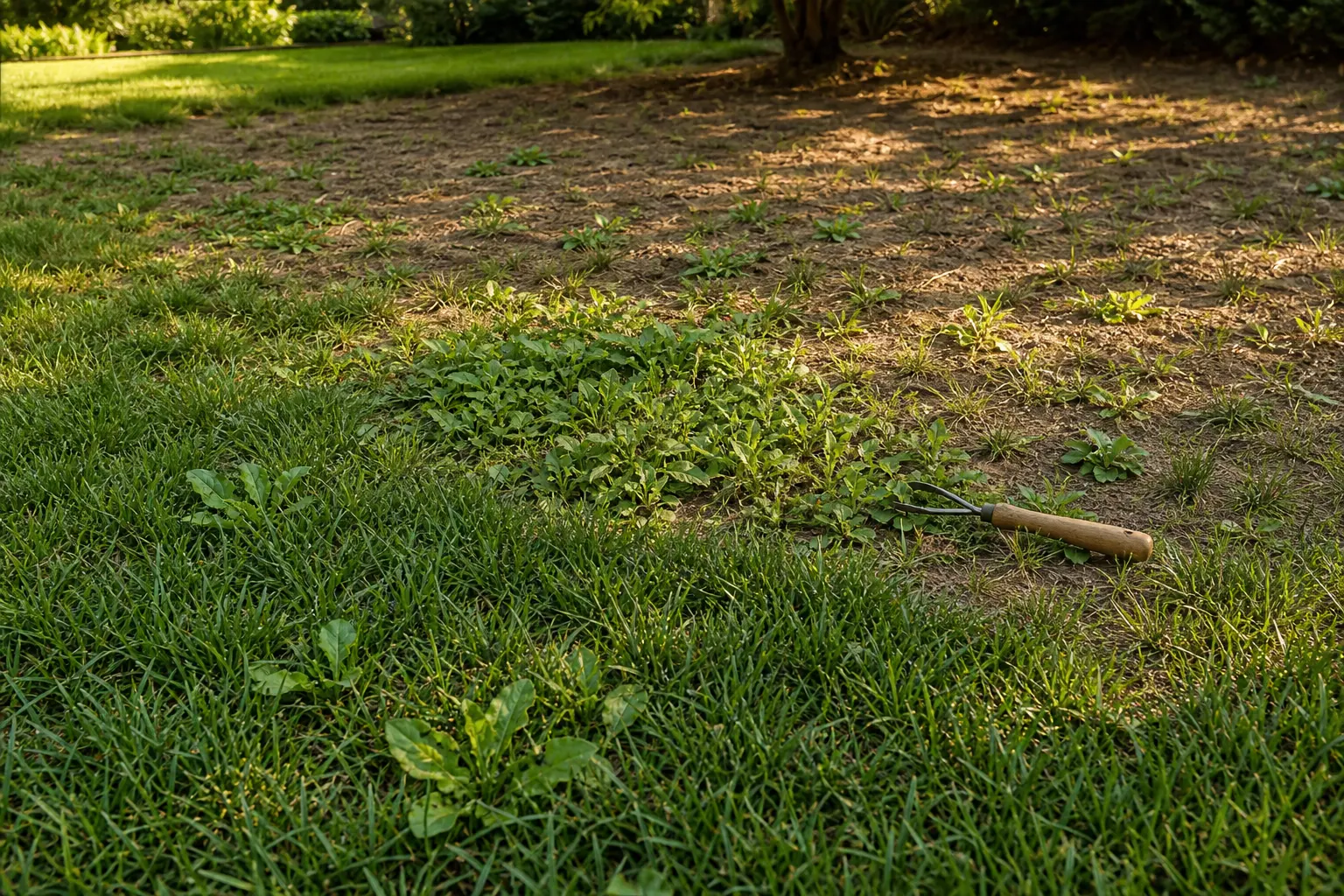
Evidence-backed guide
Weeds Before Overseeding? What's the Move?
For a thin, weedy cool-season lawn in late August, do not let a few weeds erase the seeding window. Seed where grass still has a foothold, isolate bad patches, and use the exact product label to schedule any herbicide treatment.
· 3 sources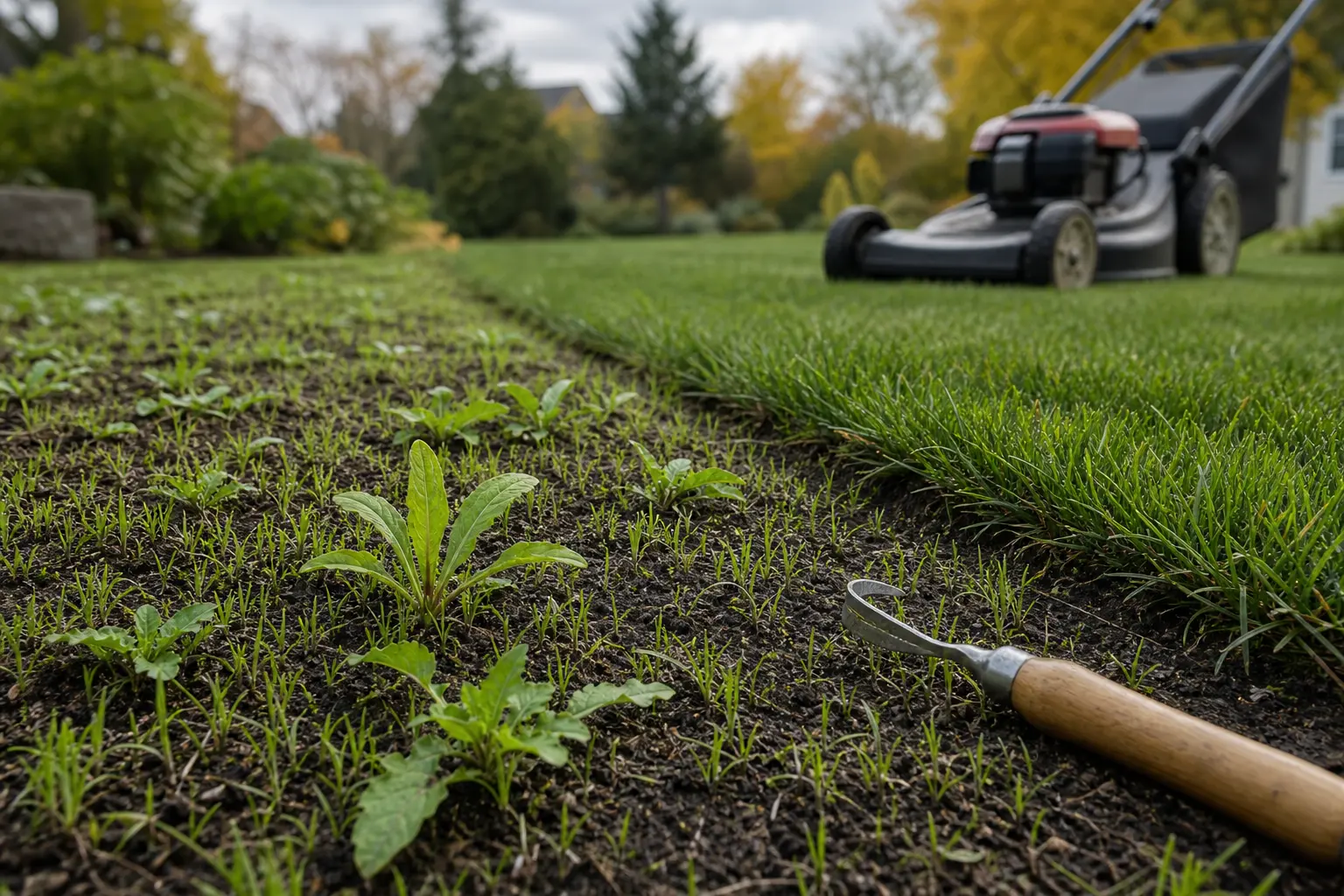
Evidence-backed guide
New Grass, New Weeds: When to Pull, Mow, or Wait to Spray
A few weeds beating new grass out of the ground is usually an establishment problem to manage, not a weed-war emergency. Use mow count, turf maturity, weed spread, and the exact product label to choose the next move.
· 4 sources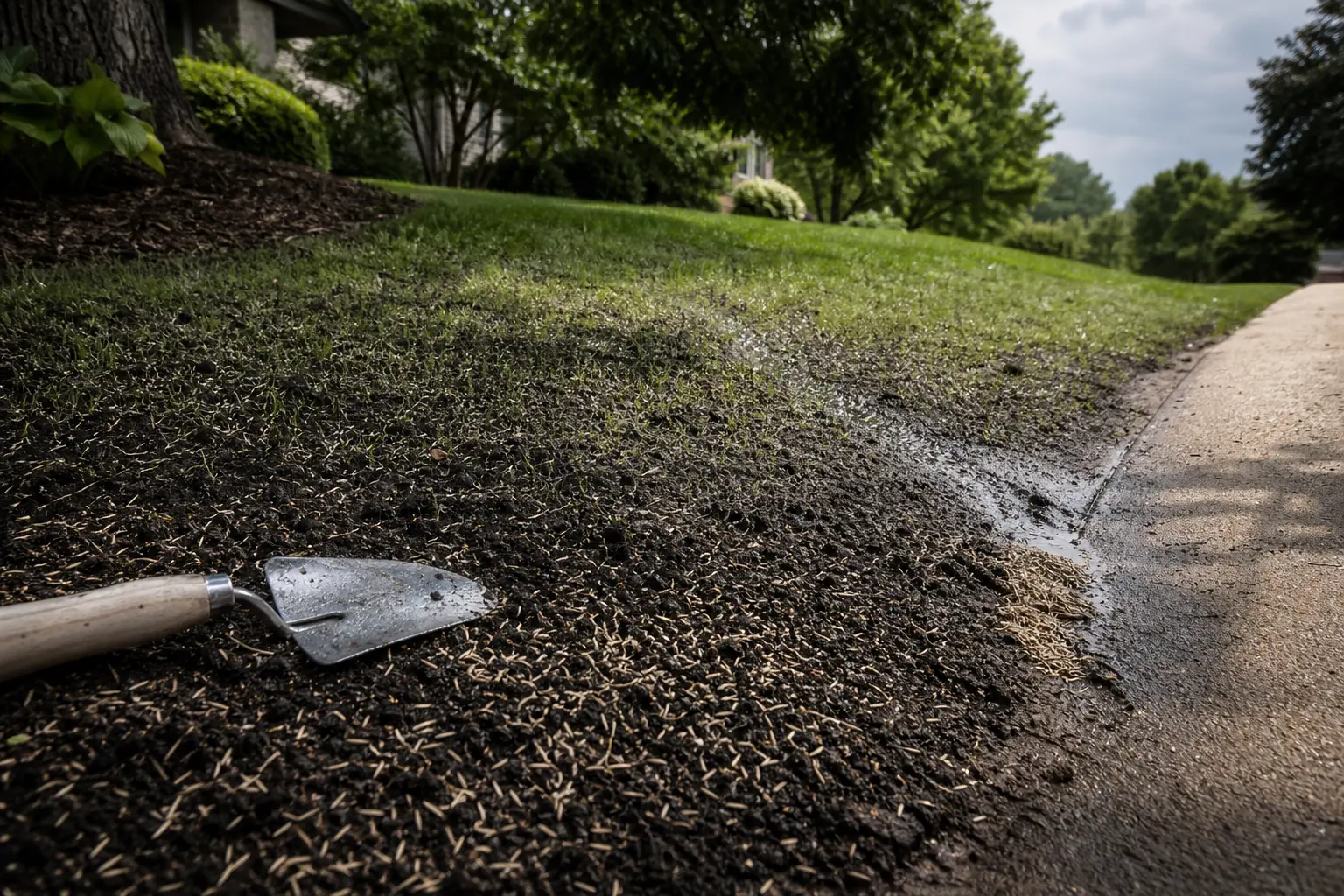
Evidence-backed guide
Fresh Seed Got Rain? Check the Soil Before You Water Again
After rain, let the moisture where the seed sits—not the irrigation timer—decide whether fresh cool-season seed needs water, a delay, or washout repair.
· 6 sources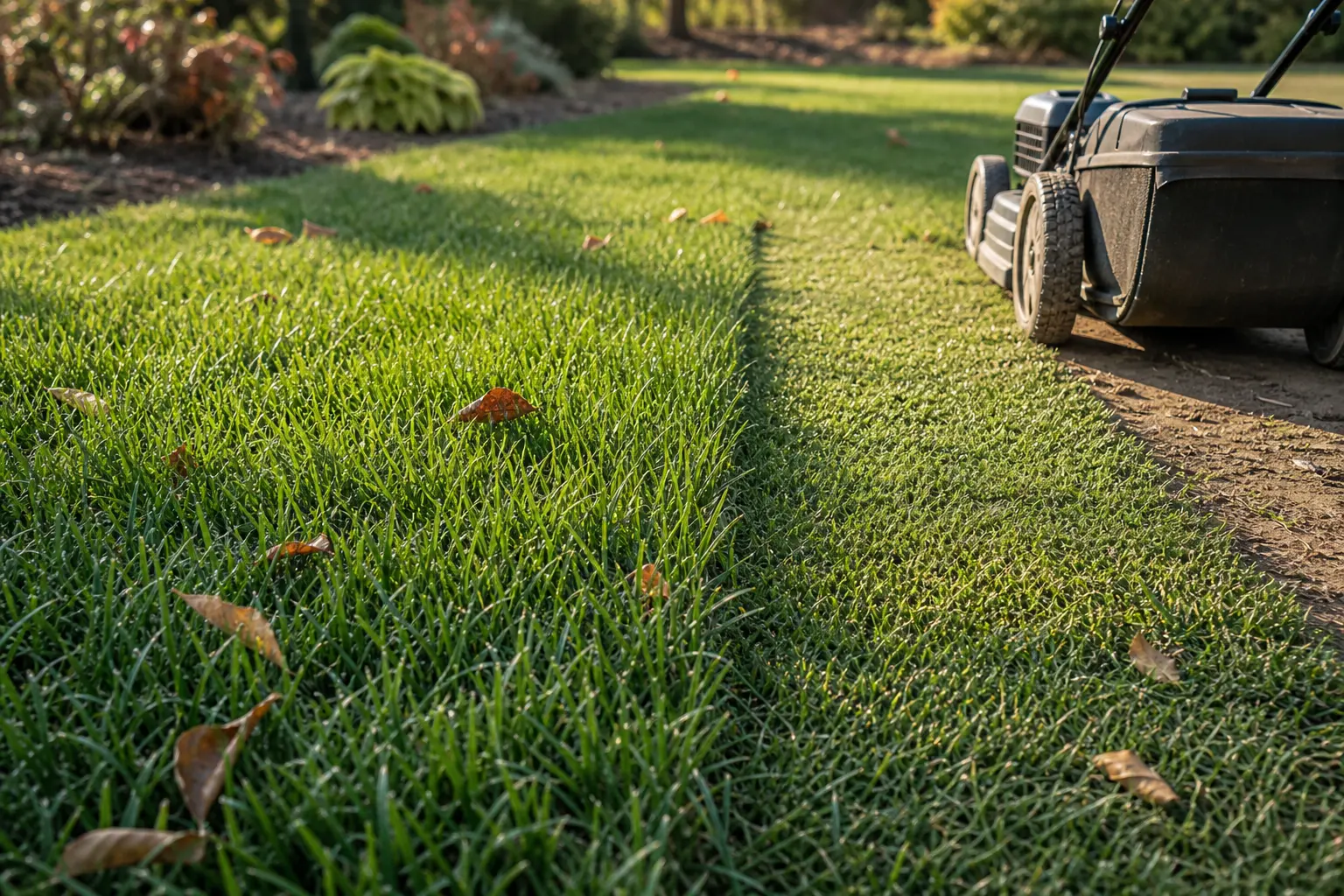
Evidence-backed guide
Don’t Mow New Grass by the Calendar—Use Height and Firm Ground Instead
For a newly seeded cool-season lawn, the first mow depends less on the week count than on seedling height, firm soil, and a clean, light cut.
· 5 sources