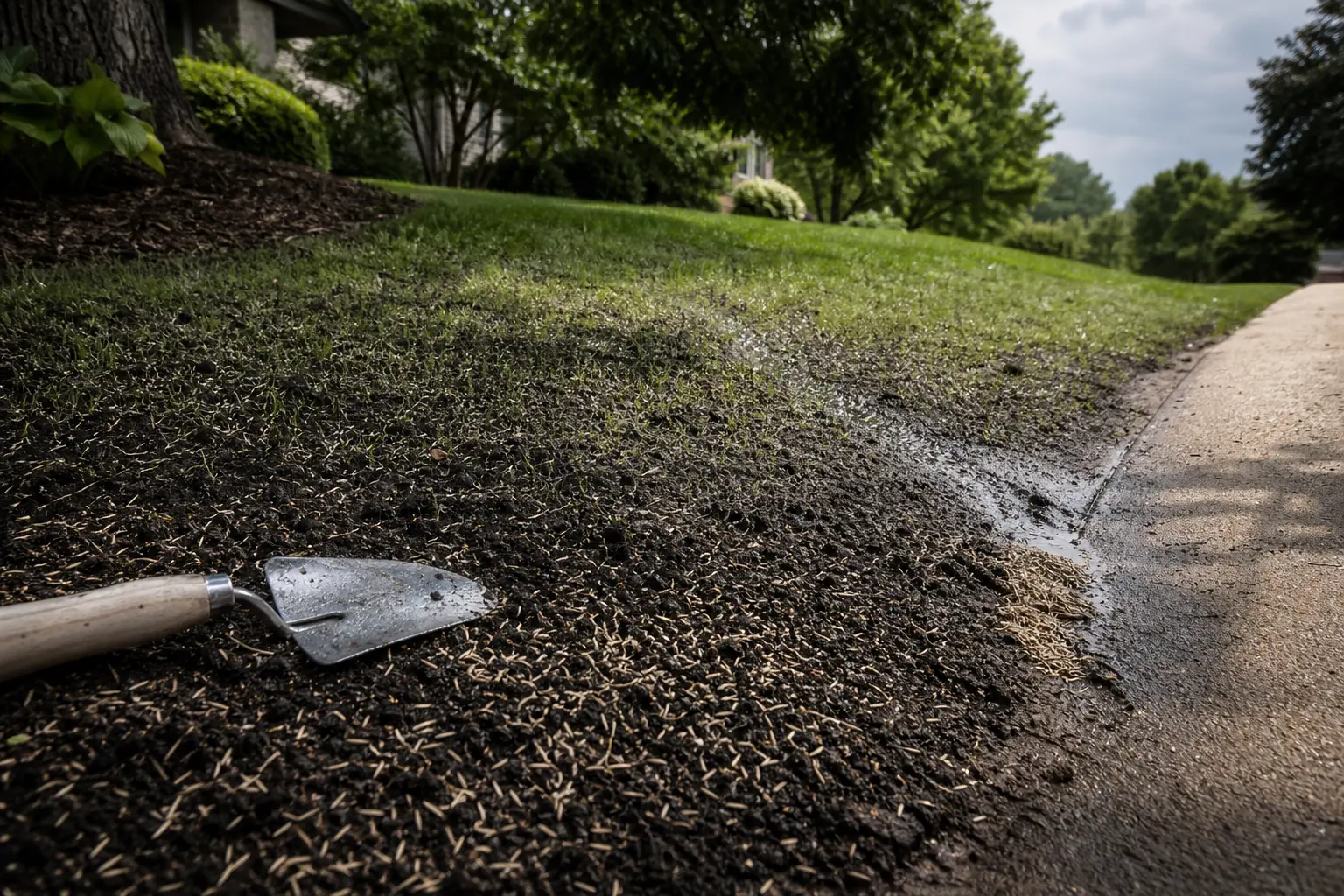
Fresh seed does not need water by habit after rain. If the soil where the seed sits is still moist and the ground is not shiny, puddled, or muddy, skip the sprinkler for now. The goal during establishment is consistently moist soil around the seed—not a saturated seedbed. Extension guidance recommends reducing irrigation during rainy periods and avoiding excessively wet conditions. S1S3
That is especially important with late-summer cool-season seeding. The first weeks matter, but rain can do the watering job when it actually reaches the seedbed. S1S3
Make the call from the seed zone
After the rain has soaked in, check more than one spot. Press a finger or small hand tool gently into the surface soil where the seed sits. Include an open sunny area, a pavement edge, a slope, and a spot under tree cover if you have one.
You want soil that feels cool and moist—not shiny, muddy, or waterlogged. If it is moist, wait. Check again later rather than restarting the usual schedule.
If a brief shower only darkened the surface and the seed zone is already drying, use a light supplemental watering to restore moisture without causing runoff. Frequent, light watering is appropriate for a new seedbed because the seed is at the surface. It is not the watering program for an established lawn. S2S6
A rain gauge tells you rain fell. The soil check tells you whether that rain reached the seed zone. Wind, shade, sandy soil, mulch, and slope can leave different parts of the same yard needing different treatment.
Know which kind of rain you had
**Gentle rain that left the seed zone moist:** Leave the system off. Penn State advises reducing irrigation during rainy, cool, or overcast periods. S3
**A short shower that barely reached the soil:** Wait until you check the seed zone. If it is drying, add a light watering later. Do not judge by wet grass blades or darker-looking soil alone.
**A hard storm with moving water:** Inspect for small channels, exposed soil, and seed gathered in lines, low spots, or mulch piles. Rain or irrigation can wash seed away where water concentrates. S2
If seed clearly collected in piles, wait until the surface firms enough to work gently. Then redistribute only the obvious accumulation and touch up bare channels. If a slope keeps washing out, a light mulch or suitable erosion-control cover can help hold soil and seed in place. The priority is to slow runoff, not to add water.
Keep water from running toward pavement, drains, or waterways, and follow local water-use restrictions. S5
After germination, start stretching the interval
Once seedlings emerge, do not stay on frequent surface sprinkles indefinitely. Young grass still cannot be allowed to dry out, but as roots develop, shift gradually to longer intervals between waterings and deeper wetting. Illinois and Minnesota Extension both recommend reducing watering frequency as young turf becomes established. S1S2
There is no universal day to make that change. Watch the parts of the yard that dry fastest, especially sunny edges and slopes. If seedlings wilt or the seed zone dries quickly, you stretched the interval too far. If the ground stays muddy or water begins to run off, it is receiving too much water or too quickly.
Keep this advice in its lane
This is guidance for newly seeded cool-season turf in the late-summer establishment window. Late summer is a preferred seeding period for cool-season lawns in many northern regions, though timing and conditions vary locally. S1S5
Warm-season lawn repair follows a different calendar and may use different establishment methods. Established turf also has different watering needs: deeper and less frequent irrigation rather than a constantly moist surface. S6
After rain, start with the spots that usually dry out or wash out first. If the seed zone is moist, let the irrigation timer stay off.