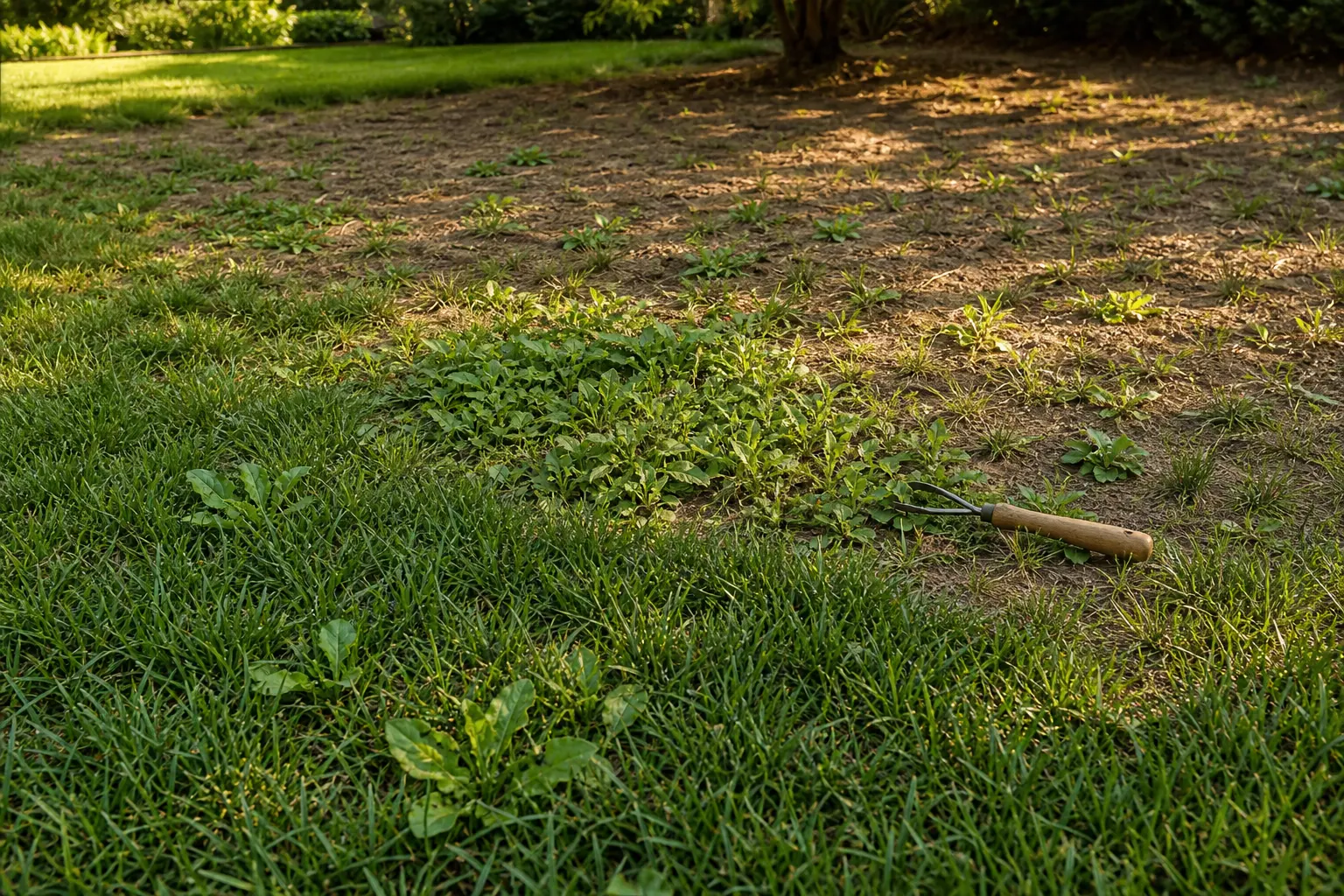
If grass still covers most of the lawn, protect the seeding window
For a cool-season lawn in late August, a few visible weeds are not automatically a reason to spray first. If desirable grass still covers most of the ground, seed the thin but viable areas and deal with weeds separately. Late summer into early fall is an important establishment period for cool-season turf. S3
The catch is any spot you plan to treat with herbicide. A **postemergence herbicide** is a product applied to weeds that are already growing, and it may require a delay before you can reseed. That wait comes from the label on the exact product in your hand—not from the phrase “weed killer,” an active ingredient, or a generic online schedule.
Think in zones rather than giving the whole yard one answer.
Take a five-minute inventory before buying seed or spray
Walk the lawn and sort it into three conditions:
- **Mostly grass, scattered weeds:** Grass still occupies most of the area, even if it looks thin. This is generally a seed-first area.
- **A few bad patches:** Most of the lawn is serviceable, but several concentrated spots are weedy or sparse. Seed the better sections and handle these patches separately.
- **Widespread weeds or bare ground:** If weeds and sparse ground cover take up a large share of the lawn, treat this as a renovation decision, not routine overseeding.
Separate bare patches from weedy turf as you look. Then identify the weed before choosing a control method. Broadleaf weeds have wide leaves and are managed differently from crabgrass, annual bluegrass, sedges, and perennial grassy weeds. If you cannot identify what is growing, hold off on selecting a product.
Also look for the reason turf thinned in the first place: chronic shade, compacted soil, poor drainage, heavy thatch, tree-root competition, drought stress, or mowing too low. Seed can fill a suitable opening, but it cannot solve those conditions by itself.
Path 1: Seed first where grass still has a foothold
If grass is still winning, overseed the thin areas and pull manageable weeds by hand. That keeps a few plants from turning into a whole-yard herbicide project.
Keep new seed consistently moist while it establishes, and avoid cutting the lawn too short. Before applying lime or fertilizer, use a soil test rather than guessing; University of Maryland Extension recommends soil-test-guided lime and fertilizer decisions for lawn establishment and maintenance. S3
This is not a decision to ignore weeds forever. It is a decision to keep the fall project proportional to the problem in front of you.
Path 2: Seed the good areas and isolate the worst patches
A lawn does not need one plan from fence to fence. Seed the mostly grassy sections now. In concentrated trouble spots, hand-remove weeds where practical or consider a limited treatment only if the product is labeled for your turf species and site.
Before spraying, read the directions for reseeding, mowing, irrigation, temperature, re-entry, and turf-species restrictions. The label and applicable local law control; some jurisdictions restrict lawn pesticide use.
Do not rely on a universal spray-to-seed wait. One EPA-hosted SpeedZone turf label permits reseeding two weeks after application. S1 Another EPA-hosted label, NFA-0020110, specifies at least 30 days before reseeding for its labeled grass use. S2 Those are examples of product-specific directions, not interchangeable recommendations.
If the label’s wait would consume your remaining local seeding window, do not force spraying and seeding into the same patch. Seed the viable lawn now, then schedule weed control for an appropriate later window.
Path 3: Pause and plan a renovation when the lawn has lost its base
When weeds and bare ground are widespread, scattering seed may only postpone the real repair. Start with the underlying cause: shade, compaction, drainage, thatch, mowing height, drought stress, or a nutrient issue.
Use a soil test to guide lime and fertilizer choices. S3 Then decide whether the affected area needs a larger renovation plan. If weed control is part of that plan, confirm that the product is labeled for your grass and site, and build the calendar around its exact reseeding restriction.
Warm-season lawns: do not borrow this calendar
This is a cool-season fall-renovation guide. Bermudagrass, zoysiagrass, St. Augustinegrass, and other warm-season lawns follow a different seasonal rhythm; their fall fertility and establishment decisions should not be borrowed from a cool-season overseeding plan. S3 Use turf- and region-specific guidance before seeding or treating those lawns.
Your next move
Before buying anything, photograph the weed, estimate how much of the lawn is still desirable grass, and read the **reseeding** section of the exact herbicide label.
If grass still dominates, protect the seeding window. If only a few patches are bad, keep treatment limited. If weeds and bare ground dominate, repair the reason the lawn thinned before expecting new seed to solve it.