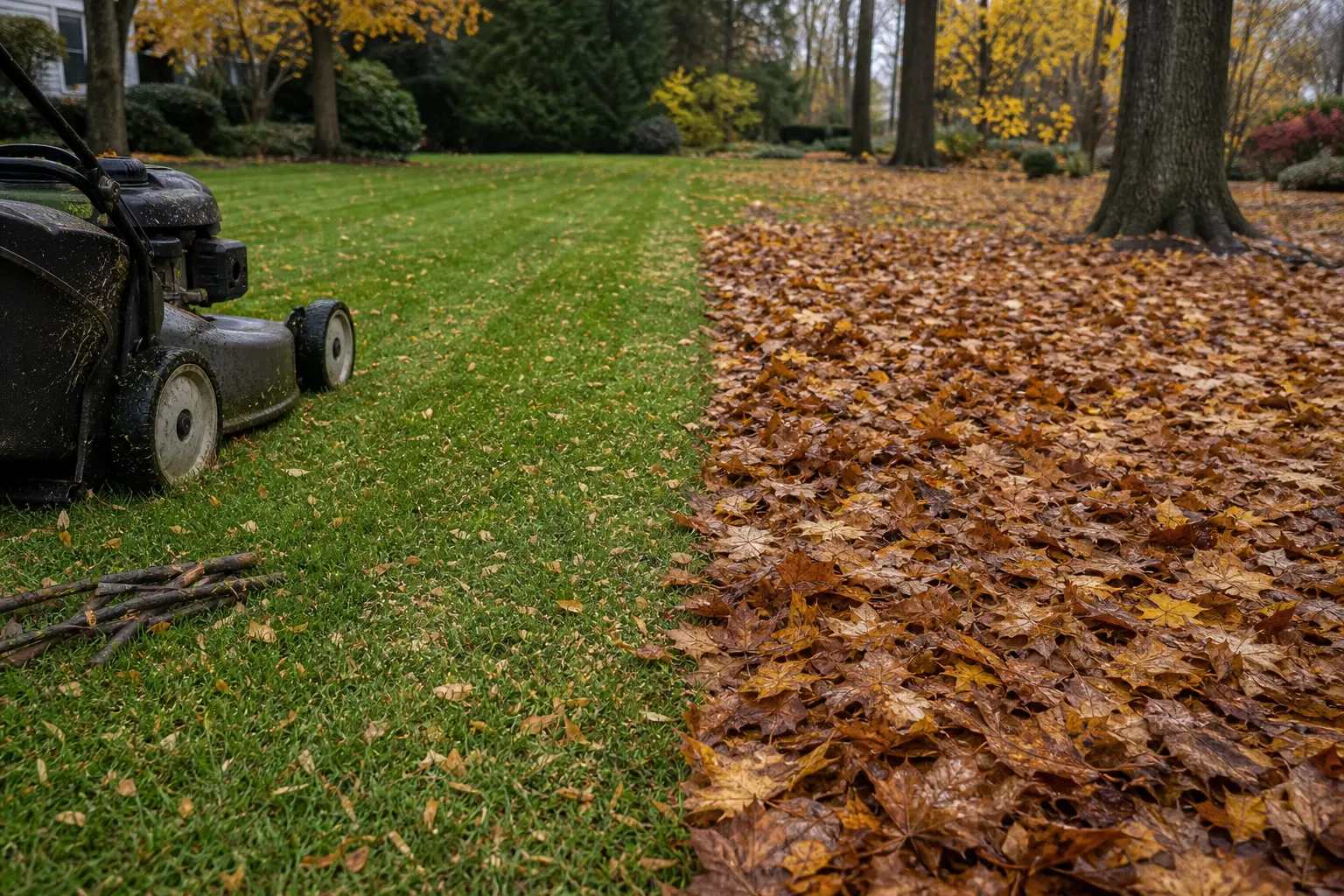
Mulch the leaves while they are still manageable. Switch to bagging, raking, or composting when the mower leaves clumps or a continuous layer that makes the lawn look tucked in for a long nap.
That is the useful dividing line. Regular mulch mowing can dispose of deciduous leaves without the commonly feared buildup of thatch or routine harm to turf quality, while a persistent leaf layer can block light, retain moisture, and weaken turf heading into winter. S1S2S3
The visual test beats a rigid percentage
After mowing, look down at the lawn rather than counting leaves. If you can readily see upright grass through small, scattered fragments, mulch mowing is still working. If leaf pieces overlap into a broad cover, collect the excess.
This is not a choice between a spotless lawn and abandoning it to the maples. Finely chopped leaves can return organic matter and nutrients to the soil, and research-backed Extension guidance says they do not create thatch. S1S2 But whole leaves or a substantial mulched layer left over winter reduced post-winter turf quality in a field study, compared with turf where no leaf layer remained. S3
The exact point where a lawn crosses that line changes with leaf type, grass density, mower performance, and weather. A thin stand of turf can be buried by far less material than a dense lawn. Trust the open-canopy test: grass should still look like grass.
Make mulch mowing easier on the lawn and mower
During active leaf drop, mow more often instead of saving everything for one heroic November afternoon. Frequent mowing gives the blade a smaller load and makes fine fragments more likely. S1S2
- Clear sticks, branches, and other debris before mowing. They are hard on equipment and can become thrown hazards. S1
- Use a sharp blade and mow when leaves are dry enough to shred rather than smear into clumps. Multiple passes may be needed. S1
- Keep the mower at an appropriate height for your grass; do not scalp the lawn in an attempt to reach the leaves. Proper mowing height supports turf health. S2
- Wear eye protection when conditions or equipment make thrown debris possible.
If the first pass leaves windrows or wet piles, do not keep trying to pulverize a mess into the canopy. Collect it, then send those leaves to a compost pile or use them in landscape beds if that fits your yard routine.
Know the spots that need earlier cleanup
A wet, shaded corner is not the same as an open, breezy section of lawn. Leaves there are slower to dry and more likely to mat. Newly seeded patches also deserve a lighter touch: seedlings need light and can be easily buried.
In northern areas, prolonged wet leaf cover followed by winter snow can create conditions favorable to snow mold and can delay spring green-up. S2 That does not mean every leaf fragment causes disease. It means areas with persistent cover, poor airflow, dampness, or a history of winter disease are poor places to test the limits of mulching.
Southern lawns may remain actively growing later into fall, but the same basic rule holds: do not allow leaves to seal off the turf canopy. Growing grass still needs light and air, even if the calendar says it ought to be wearing a sweater.
Mulched leaves are not a replacement for a soil-test-based fertility plan, and they will not fix compaction, poor drainage, deep shade, or an existing disease problem. They are simply a useful way to handle a manageable amount of leaf fall. S1S2
Try one section, then inspect it tomorrow
After the next leaf fall, mulch a manageable section and inspect it the following morning. If the fragments are scattered and you can still see plenty of upright grass, continue with frequent mulch mowing. If the leaves have settled into clumps or a mat, collect the excess before it lingers.
A timely local weather signal can help you choose a dry mowing window and stay ahead of a heavy drop. Your own lawn history should make the final call: note which areas stay damp, get buried first, or struggle after winter, then clean those up sooner next fall.